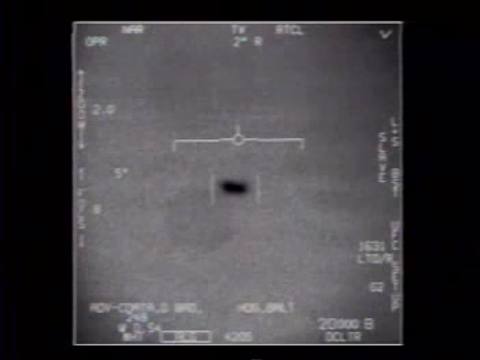
The Pentagon authorises release of three unclassified Navy videos (one from November 2004, two from January 2015) after unauthorised releases in 2007 and 2017. Says they reveal no sensitive capabilities and do not affect later investigations.
“DOD is releasing the videos in order to clear up any misconceptions by the public on whether or not the footage that has been circulating was real, or whether or not there is more to the videos.” source
Internet Archive copy (1 May 2020). The defense.gov address now redirects to war.gov and refused automated access (HTTP 403).
OFFICIALSenate Select Committee on Intelligence (reported by Sen. Marco Rubio) · 2020-06-17
Report language backing the UAP Task Force at the Office of Naval Intelligence, criticising the lack of a unified government process, and directing the DNI to report within 180 days on eight points, from data analysis to possible foreign breakthroughs.
“However, the Committee remains concerned that there is no unified, comprehensive process within the Federal Government for collecting and analyzing intelligence on unidentified aerial phenomena, despite the potential threat.” source
Announces that Deputy Secretary David L. Norquist approved the task force on 4 August 2020, led by the Department of the Navy under the Under Secretary of Defense for Intelligence and Security.
“The mission of the task force is to detect, analyze and catalog UAPs that could potentially pose a threat to U.S. national security.” source
Internet Archive copy (8 September 2021); defense.gov refused automated access (HTTP 403).
OFFICIALOffice of the Director of National Intelligence · 2021-06-25
Nine-page unclassified report written in response to Senate Report 116-233. 144 reports from 2004 to 2021, 80 seen on multiple sensors; one explained as a deflating balloon; 18 incidents with unusual movement; five possible explanation categories.
“The limited amount of high-quality reporting on unidentified aerial phenomena (UAP) hampers our ability to draw firm conclusions about the nature or intent of UAP.” source
OFFICIALAll-domain Anomaly Resolution Office, US Department of Defense · 2024-03-08
AARO's account of the UAPTF (August 2020 to November 2021): it helped standardise and destigmatise reporting and calibrate sensors, and its methods led to identifying Chinese high-altitude balloons. Then the AOIMSG and AARO took over.
“The UAPTF helped standardize, destigmatize, and increase the volume of UAP reporting.” source
Report dated February 2024, released 8 March 2024. Archived copy (Wayback Machine, 9 January 2025): https://web.archive.org/web/20250109134632/https://media.defense.gov/2024/Mar/08/2003409233/-1/-1/0/DOPSR-CLEARED-508-COMPLIANT-HRRV1-08-MAR-2024-FINAL.PDF (original returns HTTP 403 to automated checks).
CLASSIFIEDDeclassifiedFILE NO. 016SHEET 2 OF 4
Press
Newspaper and magazine coverage, then and now. Linked, never copied.
PRESSJohn Greenewald Jr., The Black Vault · 2019-09-11
Publishes the Navy's written answers via spokesman Joseph Gradisher: FLIR1 recorded 14 November 2004, Gimbal and GoFast 21 January 2015; the Navy considers the phenomena unidentified.
Press report of an official statement given to the site by email.
On the day of the assessment, Deputy Secretary Kathleen Hicks directs a plan to formalise the task force's mission, including the requirements for a new follow-on DoD activity.
Internet Archive copy (4 August 2025); defense.gov refused automated access (HTTP 403).
An unnamed Navy spokesperson told Politico the Navy was drafting guidelines for reporting 'unauthorized and/or unidentified aircraft'; a fleet-wide message was in preparation. Press report, not the primary Navy document.
“such suspected incursions can be made to cognizant authorities” source
CLASSIFIEDDeclassifiedFILE NO. 016SHEET 3 OF 4
Video
Official footage and video discussions. YouTube loads only when you press play.
OFFICIALNaval Air Systems Command (NAVAIR) FOIA reading room · 2020-04-27
Related context only: a documentary on Elizondo and AATIP. The description does not explicitly cover the 2020 release of the three Navy videos.
Related, not a primary link for this file; linked only, not embedded. Video page opened 2026-10-31 by Argus.
CLASSIFIEDDeclassifiedFILE NO. 016SHEET 4 OF 4
Analysis
Our own reading of the file, written from the sources on the other sheets. Opinion is marked as such.
The 2020 release did not show the public anything new. The three clips had circulated for years and the Navy had already confirmed them. What changed was the sender: the Department of Defense put its name to the footage and to one word, “unidentified”. It said it was doing so to settle whether the videos were real. It did not say what the objects were.
The more lasting change happened on paper. Within four months the Senate Intelligence Committee had asked for a full intelligence report and the Pentagon had a task force. Note the order: the Senate report of June 2020 already refers to a task force at the Office of Naval Intelligence, weeks before the formal approval in August.
The resulting assessment is careful and modest. Of 144 reports, it explained one, a large deflating balloon. It said most reported objects were probably physical, that a handful seemed to show unusual movement, and that this could be sensor error, spoofing or misperception. Its five possible categories are mostly ordinary. According to AARO, the task force's main legacy was better reporting; its methods also helped identify Chinese high-altitude balloons.
What it shows
That the US Department of Defense officially released the three Navy videos and kept the objects classified as unidentified.
That Congress and the Pentagon set up a formal process in 2020 to collect and analyse UAP reports.
That US intelligence could explain only one of 144 reports in 2021, mainly for lack of data.
What it doesn't prove
That the videos show anything extraordinary. The release confirmed their authenticity, not their content.
That the unexplained reports involve unknown technology. The assessment lists clutter, weather, US programmes and foreign systems as possible causes.
That the government was hiding a conclusion. The assessment says plainly that the data were too limited to draw firm conclusions.
The other side
One can fairly say that “confirmed” flatters what was actually confirmed. The Pentagon confirmed that the footage was real, not that anything in it was unusual. The assessment that followed found that the limited amount of high-quality reporting hampered any firm conclusion, explained only one case, and named airborne clutter, natural atmospheric phenomena, US programmes and foreign systems as the likely homes for the rest. Read that way, 2020 confirmed paperwork, not phenomena.
An academic's essay on the muted reaction: the clips had leaked in 2007 and 2017, so official confirmation arrived in stages. Dodd himself argues the footage deserves serious attention.
“It should have been a momentous announcement, but it seems to have barely moved the needle on the UFO controversy.” source
TO VERIFY Candidates, not yet checked
Exact start of the UAP Task Force's work at the Office of Naval Intelligence before its formal approval (Senate report of 17 June 2020 already refers to it).
Primary Navy document / fleet-wide message for the April 2019 UAP reporting guidelines: not found; press confirmation via Defense News (25 Apr 2019) is sourced.
Pentagon spokesperson statements to the press on 27 April 2020 (Sue Gough, quoted by Forbes): forbes.com returned 403.
The DoD release URL in the brief (defense.gov/News/Releases/Release/Article/2165713) now redirects to war.gov; both refused automated access, so an Internet Archive copy is cited.
Found, but not linked to a source we trust. Not on the sheets until they are.